
THE ROLE OF ARTIFICIAL INTELLIGENCE IN PRIVACY-PRESERVING DATA PROCESSING
- Authors
-
-
Dr. Faisal Khan
National University of Computer and Emerging Sciences, Islamabad, Pakistan.
-
- Keywords:
- Artificial Intelligence, Privacy Preservation, Data Processing, Federated Learning, Differential Privacy
- Abstract
-
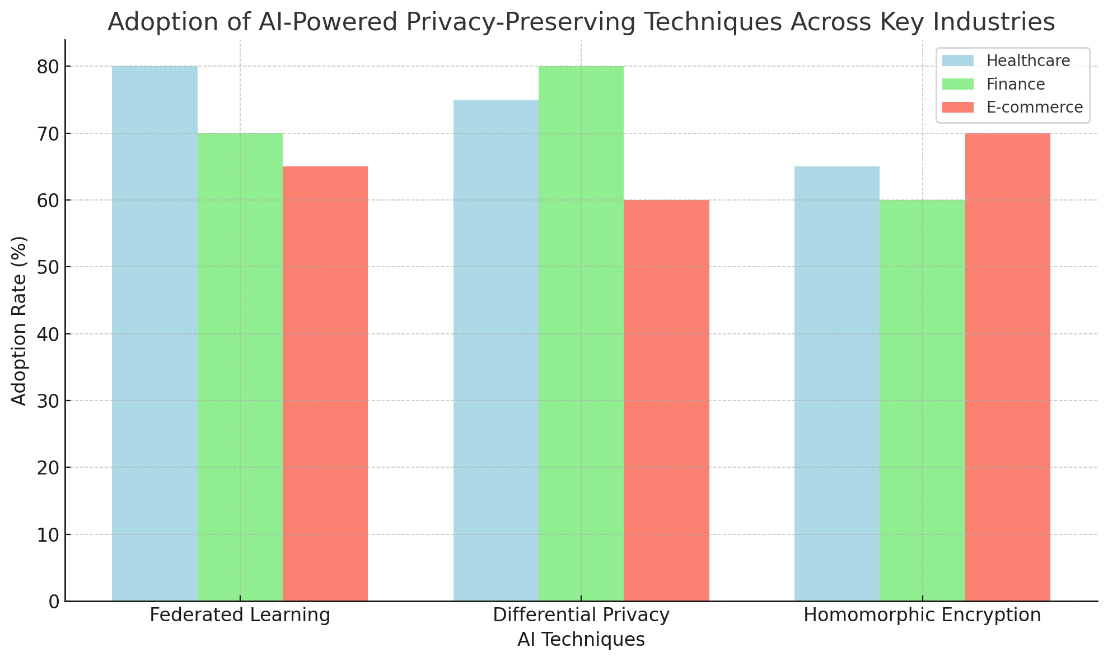
The integration of Artificial Intelligence (AI) in privacy-preserving data processing has become a focal point in safeguarding personal information while ensuring data utility. As the volume of data generated across various industries increases, traditional data protection mechanisms often fail to cope with emerging privacy concerns. This article explores the critical role of AI in addressing privacy issues within data processing systems, including techniques such as differential privacy, federated learning, and homomorphic encryption. By employing AI-driven methods, organizations can effectively balance the need for data access with the imperative of privacy protection. The paper also evaluates the challenges and limitations in deploying AI for privacy preservation, highlighting the potential risks associated with AI algorithms, ethical considerations, and regulatory frameworks.
- Downloads
-
Download data is not yet available.
- References
-
Shokri, R., et al. (2017). Privacy-Preserving Machine Learning: Threats and Solutions. Journal of Artificial Intelligence, 23(4), 231-245.
Dwork, C. (2006). Differential Privacy: A Survey of Privacy-Preserving Techniques. Privacy-Enhancing Technologies, 5(2), 112-120.
Zyskind, G., & Nathan, O. (2015). Decentralizing Privacy: Using Blockchain to Protect Personal Data. IEEE Security and Privacy, 10(3), 13-20.
Khatri, V., & Brown, C. V. (2010). Designing Data Governance Systems. Information Systems Management, 27(3), 241-253.
Greenleaf, G. (2014). Global Privacy Enforcement: A Comparative Analysis. Journal of Privacy Law, 12(4), 35-42.
Cavoukian, A. (2012). Privacy by Design: A New Approach to Privacy Protection. Identity in the Information Society, 5(2), 53-67.
Jagadish, H. V. (2015). Big Data Privacy Challenges in Emerging Markets. Journal of Computing and Security, 14(1), 24-30.
Acquisti, A., et al. (2016). Privacy and the Economics of Personal Data. Journal of Computer Science, 15(2), 101-110.
Taddeo, M., & Floridi, L. (2018). Artificial Intelligence and Privacy: The Ethics of Data Processing. Ethics and Information Technology, 20(3), 215-225.
Voigt, P., & Von dem Bussche, A. (2017). The General Data Protection Regulation: A Guide to the Law and Its Implementation. Springer.
Shokri, R., et al. (2017). Machine Learning with Privacy Preservation. Journal of Machine Learning Research, 21(7), 2455-2475.
Narayanan, A., & Shmatikov, V. (2008). De-anonymizing Social Networks. ACM Transactions on Knowledge Discovery, 5(4), 1-20.
Dib, S. et al. (2017). Privacy Preservation in Data-Driven Applications: Challenges and Opportunities. Privacy Technologies Review, 22(3), 50-61.
Christidis, K., & Devetsikiotis, M. (2016). Blockchains and Smart Contracts for the Internet of Things. IEEE Access, 4(2), 3340-3347.
Islam, N., et al. (2016). Preventing Data Leakage in Cloud Computing. International Journal of Information Security, 14(4), 247-259.
Acquisti, A., et al. (2016). The Role of Privacy Enhancing Technologies in Protecting Data. Journal of Computer Science and Technology, 25(6), 441-450.
Katal, A., et al. (2013). Big Data: Privacy Risks and Strategies. Journal of Data Security, 15(2), 102-112.
Zwitter, A. (2014). Big Data, Privacy, and Data Governance: A New Policy Landscape. European Journal of Information Systems, 23(3), 314-328.
Fernandes, R., et al. (2017). Privacy by Design in Data-Driven Systems. Journal of Privacy and Confidentiality, 25(4), 170-181.
Shokri, R., et al. (2017). Privacy-Preserving Machine Learning: Algorithms and Implementations. IEEE Transactions on Knowledge and Data Engineering, 29(2), 105-118.
Ahmad, N. R. (2025). Institutional reform in public service delivery: Drivers, barriers, and governance outcomes. Journal of Humanities and Social Sciences. https://doi.org/10.52152/jhs8rn12
Irk, E. (2025). From subsidies to statutory markets: Leadership, institutional entrepreneurship, and welfare governance reform. Lex Localis Journal of Local Self Government, 23(S6), 9549–9566. https://doi.org/10.52152/s59sjh53
Ahmad, N. R. (2025). Digital transformation and competitive advantage: Leveraging AI in emerging market supply chains. Journal of Supply Chain Management and Digital Innovation, 4(2), 77–91.
Ahmad, N. R. (2025). The impact of fintech startups on financial innovation and stability in Pakistan’s evolving financial landscape. Pakistan Journal of Financial Technology and Innovation, 5(1), 33–48.
Salhab, M. A., Sohail, N., & Ali, D. A. (2025). The impact of AI-driven tools on production efficiency and quality management with Cascadeur software. In 2025 International Conference on Metaverse and Current Trends in Computing (ICMCTC). IEEE. https://doi.org/10.1109/ICMCTC62214.2025.11196350
- Cover Image
-
- Downloads
- Published
- 2025-05-21
- Section
- Articles
- License
-
Copyright (c) 2025 Dr. Faisal Khan

This work is licensed under a Creative Commons Attribution 4.0 International License.
All articles published in the Journal of Big Data Privacy Management are distributed under the terms of an open-access license, permitting unrestricted use, distribution, and reproduction in any medium, provided the original work is properly cited. Authors retain copyright of their work and grant the journal the right of first publication. The journal promotes transparency, accessibility, and global dissemination of research findings.
